For years, laser resurfacing involved a tradeoff. A more aggressive treatment could produce noticeable correction but require significant redness, peeling and time away from normal activities. A lighter treatment offered an easier recovery but might not fully address stubborn sun damage, uneven texture or deeper signs of aging.
Patients sometimes needed several separate appointments because one treatment targeted pigment, another improved surface texture and another stimulated collagen.
HALO TRIBRID was designed to close that gap.
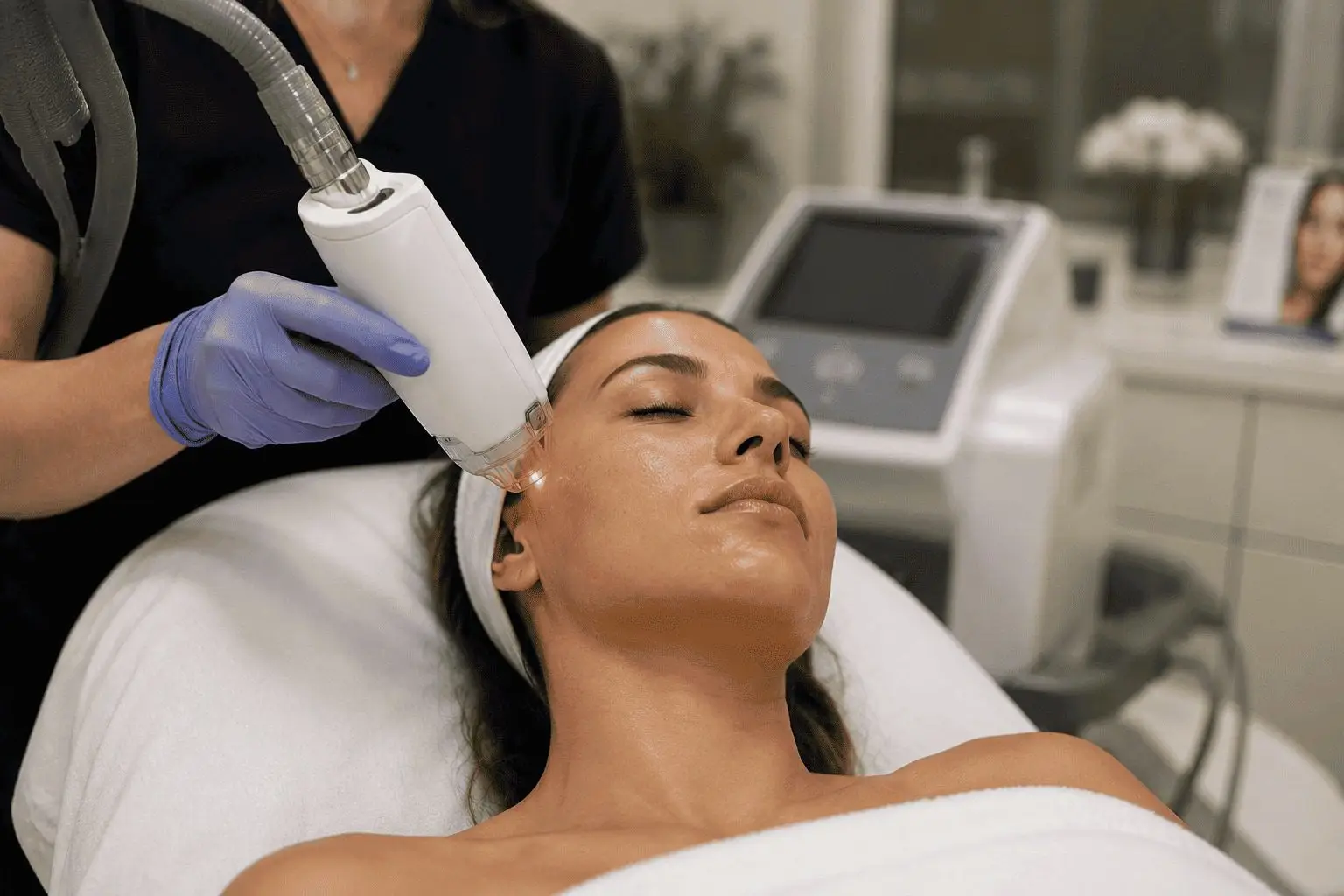
This advanced resurfacing system combines three independently controlled wavelengths in one handpiece. It brings together the technologies behind traditional HALO, MOXI and erbium laser resurfacing, allowing a provider to address different layers of the skin during one customized treatment.
For patients considering HALO TRIBRID laser treatment in Charlotte, the important question is not simply whether the device is powerful. It is whether its three wavelengths can be adjusted to match your skin concerns, skin tone, recovery preferences and upcoming schedule.
What Makes HALO TRIBRID Different?
The original HALO laser was the first hybrid fractional laser to deliver ablative and non-ablative wavelengths during the same treatment. One wavelength addressed surface-level concerns while the other reached deeper into the skin.
HALO TRIBRID expands that approach by adding a third wavelength.
The system combines 2940 nm, 1927 nm and 1470 nm wavelengths on Sciton’s JOULE X platform. Each wavelength can be controlled independently, allowing the treatment to be adjusted according to the patient’s specific combination of pigment, texture and deeper skin-quality concerns.
That independent control is important. Instead of choosing only a light, moderate or aggressive preset, the provider can adjust how much each wavelength contributes to the treatment.
A patient with noticeable sun damage but relatively smooth skin may receive different settings from someone whose primary concerns are acne scars, enlarged pores and uneven texture.
Understanding the Three Wavelengths
| Wavelength | Technology | Primary Treatment Level | Commonly Addressed Concerns |
| 2940 nm | Ablative erbium | Outer surface of the skin | Rough texture, fine lines, visible pores and scars |
| 1927 nm | Non-ablative thulium | Superficial pigment layers | Brown spots, sun damage, uneven pigmentation and dullness |
| 1470 nm | Non-ablative | Deeper dermal tissue | Collagen renewal, firmness and long-term skin quality |
The 2940 nm wavelength performs controlled superficial resurfacing. It removes damaged surface tissue to improve how the skin feels and reflects light.
The 1927 nm wavelength focuses more heavily on visible pigment and discoloration. It may be helpful for patients whose skin looks blotchy, sun-damaged or uneven.
The 1470 nm wavelength reaches deeper and supports dermal renewal. Changes related to collagen tend to develop gradually rather than appearing immediately after treatment.
Sciton describes the three wavelengths as working together to refine texture, improve pigmentation and encourage deeper skin renewal in one session.
HALO TRIBRID vs. Traditional HALO
HALO TRIBRID does not necessarily make the original HALO treatment obsolete. It gives the provider a wider range of treatment options.
| Feature | Traditional HALO | HALO TRIBRID |
| Number of wavelengths | Two | Three |
| Wavelengths used | 1470 nm and 2940 nm | 1470 nm, 1927 nm and 2940 nm |
| Surface resurfacing | Yes | Yes |
| Deeper dermal treatment | Yes | Yes |
| Additional pigment-focused wavelength | No | Yes |
| Independent treatment channels | Two | Three |
| Downtime | Adjustable by treatment intensity | Adjustable by treatment intensity |
Patients who have previously had HALO and liked their results may find that HALO TRIBRID offers more flexibility, particularly when uneven pigmentation is a major concern.
Traditional HALO remains a proven hybrid fractional treatment. HALO TRIBRID builds on that technology by allowing surface texture, superficial pigment and deeper dermal renewal to be addressed through three separate channels.
What Can HALO TRIBRID Treat?
HALO TRIBRID may be considered for several common complexion concerns, including:
- Sun damage and brown spots
- Uneven pigmentation
- Fine lines and early wrinkles
- Rough or uneven skin texture
- The appearance of enlarged pores
- Acne scars and other visible scars
- Dull or tired-looking skin
- Early changes in firmness
- Overall skin-quality concerns
The treatment is not limited to the face. Depending on the patient’s needs and the provider’s assessment, areas such as the neck, chest, arms, hands and legs may also be treated. Sciton states that HALO TRIBRID may be used on both the face and body.
Different forms of discoloration may require different treatment plans. For example, brown pigment caused by sun exposure is not treated in exactly the same way as persistent facial redness or visible blood vessels.
When redness, flushing or broken capillaries are the main concerns, BBL laser treatment may be a more appropriate starting point. HALO and BBL may also be used at different stages of a broader skin-rejuvenation plan.
Who May Be a Good Candidate?
HALO TRIBRID may be appropriate for adults who have visible sun damage, pigmentation, fine lines, acne scarring, rough texture or early changes in skin quality.
Sciton lists the technology as suitable for Fitzpatrick skin types I through VI. However, being suitable across a broad range of skin tones does not mean that every patient should receive the same settings.
People with deeper skin tones may require more conservative settings, careful preparation and an aftercare plan designed to reduce the risk of post-inflammatory pigmentation.
This is one reason the provider’s experience matters. A qualified laser provider working within a physician-led practice should evaluate your skin tone, treatment history, medications, current skin condition and risk factors before recommending treatment.
Treatment may need to be delayed when a patient has an active skin infection, significant irritation, recent unprotected sun exposure or a medical condition that could interfere with healing. Pregnancy, recent medication use and a history of abnormal scarring should also be discussed during consultation.
A personalized assessment is essential because online descriptions cannot determine whether laser resurfacing is safe or appropriate for an individual patient.
What Happens During a HALO TRIBRID Appointment?
Before Treatment
Patients are usually instructed to avoid tanning and excessive sun exposure before treatment. The provider may also recommend temporarily stopping retinoids, exfoliating acids or other irritating skincare products.
Do not stop a prescription product without speaking to the clinician who prescribed it.
Patients with a history of cold sores should tell their provider. Preventive antiviral medication may be recommended in some cases.
A topical numbing cream is generally applied approximately 30 to 60 minutes before the laser treatment begins.
During Treatment
The handpiece includes integrated cooling to help manage heat and discomfort. Motion-tracking technology helps the provider maintain even coverage while moving across the treatment area.
Most patients describe warmth, prickling or a hot sensation rather than sharp pain. Comfort levels vary according to the treatment area, treatment depth and personal sensitivity.
The laser portion commonly takes approximately 15 to 30 minutes. A complete appointment will take longer because consultation, cleansing, photography, numbing and aftercare instructions must also be completed.
Immediately After Treatment
The skin may appear red and feel warm, tight or similar to a sunburn. This warmth continues for a few hours following treatment and can be managed easily with OTC pain relievers such as Tylenol.
Cooling devices, a fan or cool compresses may help during the immediate post-treatment period. Patients should follow the specific skincare instructions provided by their treatment team.
HALO TRIBRID Recovery Timeline
Recovery depends on the settings used, the area treated and the patient’s natural healing response. No provider can guarantee an exact recovery schedule.
Sciton lists approximately three to five days of downtime. More intensive treatment settings may cause redness, dryness or visible flaking that remains noticeable for up to a week.
Day One
Redness, warmth and mild swelling may occur. Swelling can be more noticeable around the eyes. The skin may feel tight and sensitive.
Days Two and Three
The skin may develop a bronzed or sandpaper-like texture as microscopic epidermal necrotic debris, commonly called MENDs, moves toward the surface.
Although the texture may feel unusual, it is part of the resurfacing process.
Days Three to Five
Bronzed or dry skin may begin to flake naturally. Patients should not scrub, exfoliate or pick at the treated skin. Doing so can increase irritation and interfere with healing.
Days Five to Seven
Many patients feel comfortable returning to normal social activities and wearing makeup once their provider has cleared them to do so. Redness or dryness may remain visible after more intensive treatments.
The Following Weeks
Changes in brightness, clarity and pigment may become noticeable within the first several days and continue improving over the following two to three weeks.
Improvements associated with deeper dermal renewal may continue developing over several months.
Daily sun protection is essential after resurfacing. Patients should use a broad-spectrum sunscreen recommended by their provider, avoid unnecessary sun exposure and follow all post-treatment instructions.
Can HALO TRIBRID Be Combined With Other Treatments?
Laser resurfacing often works best as part of a long-term skin plan rather than as an isolated procedure.
The right combination depends on the patient’s concerns and should be planned carefully to avoid excessive irritation.
Persistent Pigmentation
Patients with melasma or complex pigmentation may require a treatment plan that includes pigment-control skincare or a professional treatment such as a Cosmelan peel.
Melasma can be difficult to manage and may worsen after inappropriate heat- or light-based treatment. A provider should identify the likely type of pigmentation before recommending a laser.
Lighter Resurfacing and Maintenance
Patients who prefer smaller corrections with a shorter recovery period may consider a MicroLaser Peel at another stage of their treatment plan.
A MicroLaser Peel focuses primarily on superficial resurfacing, while HALO TRIBRID offers treatment at several skin depths.
Redness and Visible Vessels
BBL may be recommended when redness, flushing or vascular concerns are more prominent than texture problems.
The HALO versus BBL comparison explains how the treatments address different skin concerns and why they may sometimes be used together.
Volume Loss and Expression Lines
Laser resurfacing improves skin tone, texture and quality. It does not restore facial volume or relax the muscles that create expression lines.
Dermal fillers, biostimulatory injectables and neuromodulators address different concerns. A comprehensive consultation can help determine which treatment—or combination of treatments—matches the patient’s goals.
Before or Instead of Facial Surgery
Improving skin texture and pigmentation can complement facial surgery because surgery and laser resurfacing address different aspects of aging.
Some patients may feel comfortable postponing surgery after improving their skin quality. However, laser treatment cannot reproduce the lifting, tightening or structural correction provided by a facelift or neck lift.
How Many HALO TRIBRID Treatments Are Needed?
The recommended number of sessions depends on the extent of the concern, the intensity of each treatment and the amount of downtime a patient is willing to accept.
Some patients may reach their goals with one more intensive corrective treatment. Others may prefer a series of lighter sessions or periodic maintenance.
Sciton states that many patients receive one or two treatments, but the final plan should always be based on an individual consultation.
More treatment is not automatically better. The goal is to use settings that produce meaningful improvement while respecting the patient’s skin type and ability to heal.
How Much Does HALO TRIBRID Cost in Charlotte?
The price of HALO TRIBRID treatment depends on several factors, including:
- The size and number of areas treated
- The intensity of the treatment
- Whether treatment is performed alone or with another procedure
- The skincare and recovery products included
- Whether one session or a treatment series is recommended
An accurate price requires an in-person evaluation because the same treatment plan will not be appropriate for every patient.
Patients can review the Capizzi MD med spa menu, check the practice’s current specials and learn about available payment and financing options before scheduling.
Why the Provider Matters More Than the Device
A laser is a tool. The quality and safety of the treatment depend heavily on the person selecting the settings, evaluating the patient and managing recovery.
Two practices can own the same device while producing very different treatment plans.
Important decisions include:
- Which wavelengths should receive the most emphasis
- How much energy and depth should be used
- Whether the patient’s pigmentation is appropriate for laser treatment
- How to prepare the skin before treatment
- When treatment should be postponed
- Which products should be used during recovery
- Whether another treatment would be more suitable
Capizzi MD is a physician-led cosmetic surgery and medical spa practice in Charlotte. The med spa team works under the direction of Peter J. Capizzi, MD, FACS, a double board-certified plastic surgeon and the practice’s founder and medical director.
The practice’s approach to combining surgical and non-surgical care is outlined in The Capizzi Method.
Patients considering treatment can also review the HALO before-and-after gallery and the broader laser treatment gallery. Individual outcomes vary, and photographs cannot guarantee a particular result.
Frequently Asked Questions About HALO TRIBRID
How Is HALO TRIBRID Different From Regular HALO?
Traditional HALO uses two wavelengths: 1470 nm and 2940 nm. HALO TRIBRID adds a 1927 nm wavelength that focuses on superficial pigmentation and skin brightness.
All three wavelengths can be controlled independently, allowing the provider to address surface texture, pigment and deeper dermal renewal during one treatment.
Does HALO TRIBRID Hurt?
Topical numbing cream is used before treatment, and the handpiece includes integrated cooling. Patients commonly describe warmth and prickling, although the experience varies according to treatment intensity and individual sensitivity.
How Long Does Treatment Take?
The laser portion generally takes approximately 15 to 30 minutes. Patients should allow additional appointment time for numbing, preparation, photographs and aftercare instructions.
How Much Downtime Should I Expect?
Sciton lists approximately three to five days of downtime. Redness, bronzing or flaking may remain noticeable for up to a week after more intensive treatment settings.
Patients should avoid scheduling treatment immediately before an important event because recovery cannot be predicted to an exact day.
Can HALO TRIBRID Be Used on Darker Skin Tones?
Sciton states that HALO TRIBRID can be used across Fitzpatrick skin types I through VI. Treatment settings, preparation and aftercare must still be selected according to the patient’s skin tone, history and pigmentation risk.
Can Areas Other Than the Face Be Treated?
Yes. Depending on the patient and treatment plan, the neck, chest, arms, hands, legs and other body areas may be treated.
When Will I See Results?
Some patients begin noticing early changes within several days. Pigment and clarity often continue improving during the first two to three weeks, while deeper skin-quality improvements may develop over the following months.
What Should I Do After Treatment?
Patients should keep the skin protected and follow the personalized aftercare plan provided by their treatment team. This generally includes gentle cleansing, appropriate moisturizing, avoiding picking or exfoliating, temporarily stopping active skincare ingredients and using daily broad-spectrum sun protection.
Ready to Discuss Your Skin?
An effective resurfacing plan begins with someone evaluating your skin in person. Your provider should consider your pigmentation, texture, treatment history, medical history, lifestyle and upcoming schedule before recommending settings.
Request a consultation with the Capizzi MD team to learn whether HALO TRIBRID is appropriate for your skin goals. Patients with questions about treatment, recovery or scheduling may also call (704) 655-8988.
Patients traveling to Charlotte can review the practice’s out-of-town patient information while planning their visit.